A cluttered home can make simple tasks feel harder than they need to be. When shoes gather near the door, counters fill with unused items, or furniture blocks clear walking paths, everyday movement becomes less convenient. You may find yourself stepping around objects, searching for essentials, or moving the same items repeatedly.
Decluttering can help create a home that feels easier to use. The goal is not to remove everything or create a picture-perfect space. Instead, focus on making the areas you use most often clear, comfortable, and practical.
Start With the Paths You Use Every Day
The best place to begin is with movement. Walk through your home as you normally would and notice where you slow down, turn sideways, step over items, or stop to move something.
Pay attention to:
– Entryways and hallways
– The space between the bed and the door
– Routes between the kitchen, dining area, and living room
– Bathroom entrances and cabinet areas
– Stairs and landings
– Areas around frequently used chairs and tables
These pathways often collect clutter because they are convenient places to set things down. However, even small objects can make movement feel less natural when they remain in the way.
Begin by removing anything that does not belong in the area. Place those items in a basket or box to sort later. This first step can make the space feel more open without requiring difficult decisions right away.
Use the Three-Group Sorting Method
A simple sorting system can help you make steady progress. As you work through an area, place each item into one of three groups:
- **Keep:** Items you use, need, or genuinely enjoy.
- **Move:** Items that belong somewhere else in the home.
- **Let go:** Items that are damaged, duplicated, unused, or no longer useful.
The “move” group is especially helpful. Many cluttered areas contain items that are not unwanted; they are simply in the wrong place. Return those items after finishing the main sorting process.
For items in the “let go” group, choose an appropriate next step. Some may be donated, recycled, given away, or discarded. Avoid creating a new pile that remains in the home for weeks. Set a simple deadline for completing each step.
Clear the Most Important Surfaces
Open floor space is useful, but clear surfaces can also make everyday movement easier. When tables, counters, and shelves are crowded, routine tasks often require extra rearranging.
Start with surfaces you use several times a day, such as:
– Kitchen counters
– Dining tables
– Bathroom counters
– Bedside tables
– Desks
– The top of a dresser
Keep the items you use frequently within easy reach. Store occasional-use items in drawers, cabinets, or labeled containers. If a surface tends to collect mail, keys, or small objects, create one designated spot for them instead of allowing them to spread.
A small tray near the entryway can hold keys and sunglasses. A container near the kitchen can collect reusable bags. These simple landing zones help prevent objects from being left in walking paths.
Make the Entryway Easier to Use
The entryway affects how you leave and return home. If it is crowded, the first and last moments of the day may involve searching, shifting objects, or stepping around belongings.
Keep only the essentials near the door. Depending on your space, this may include:
– A small number of frequently worn shoes
– A coat or jacket used regularly
– A bag or backpack
– An umbrella
– A place for keys
Seasonal items can be stored elsewhere when they are not in use. Shoes that are rarely worn do not need to occupy the main entryway. A small bench, hook, or shoe rack can help, but storage furniture should not make the path narrower.
The goal is to create enough open space to enter, remove shoes, and move into the home without obstacles.
Rethink Furniture Placement
Decluttering is not limited to small objects. Furniture can also affect how easily you move from one room to another.
Look at the position of sofas, coffee tables, chairs, storage units, and floor lamps. Ask yourself:
– Can you walk around each piece without squeezing through?
– Do doors open fully?
– Are drawers and cabinets easy to reach?
– Does a chair block a common route?
– Are cords crossing areas where people walk?
You may not need to remove furniture. Moving one piece a few inches or changing its angle may create a better path. Try temporary arrangements before making a final decision. Walk through the room several times and test the layout during normal activities.
Keep frequently used furniture close to where it serves a purpose. For example, a reading chair may work best near a lamp and a small table, while extra seating can be placed where it does not interrupt the main route.
Store Items Near Where You Use Them
A home is easier to maintain when storage matches your routines. If an item is stored too far away, you may leave it on a nearby surface or floor instead.
Consider where you naturally use each item. Store cleaning supplies near the areas they serve, keep cooking tools close to the kitchen work zone, and place everyday accessories near the door or bedroom.
This does not mean every room needs many storage containers. In fact, too many containers can add visual clutter and make it harder to find things. Use practical storage that is easy to access and large enough for the items it holds.
Open baskets work well for frequently used items. Drawers and cabinets can hide visual clutter. Labels may help when several people share the same space or when items are stored in deep containers.
Improve the Bedroom for Smoother Routines
The bedroom should support simple movement at the beginning and end of the day. Clear the floor around the bed, keep paths to closets and doors open, and remove items that do not belong in the room.
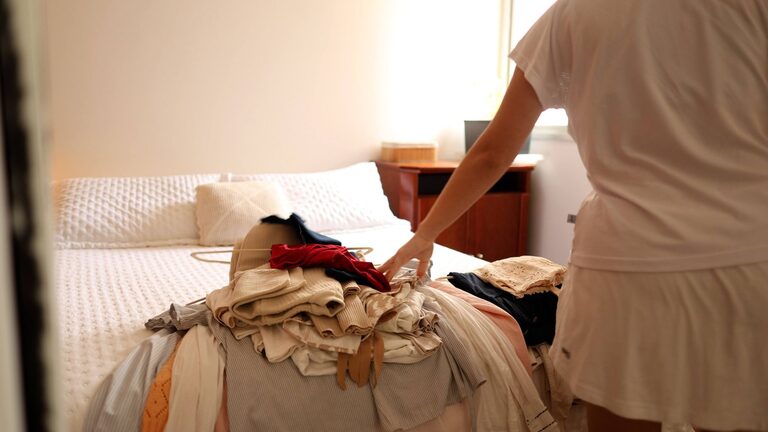
A small basket can hold clothing that is not ready for the laundry. Hooks may be useful for regularly worn items, while seasonal clothing can be stored in a closet or separate container.
Keep bedside surfaces limited to what you use regularly. A lamp, book, clock, or water glass may be enough. When the area is less crowded, making the bed, cleaning, and preparing for sleep become easier.
Create a Short Daily Reset
Decluttering works best when it becomes a small routine rather than a major project repeated only once in a while. Set aside five to ten minutes at the end of the day to restore the main pathways and surfaces.
A quick reset might include:
– Returning misplaced items
– Clearing the kitchen counter
– Moving shoes to their storage area
– Folding or hanging clothing
– Removing objects from the floor
– Emptying a small collection basket
You can also use a “one in, one out” habit for items such as clothing, kitchen tools, or storage containers. When something new comes in, consider whether an older item has become unnecessary.
Focus on Comfort, Not Perfection
A well-decluttered home is not empty. It is a home where the things you need are easy to find and the areas you use most often are easy to move through.
Work at a pace that feels manageable. Complete one pathway, surface, or room section before moving to the next. Notice which changes have the greatest effect on your routines, and use those results to guide future projects.
By clearing common routes, placing items near their point of use, and maintaining a short daily reset, you can make everyday movement feel more natural. The result is a home that supports your routines instead of adding extra steps to them.
About the Author